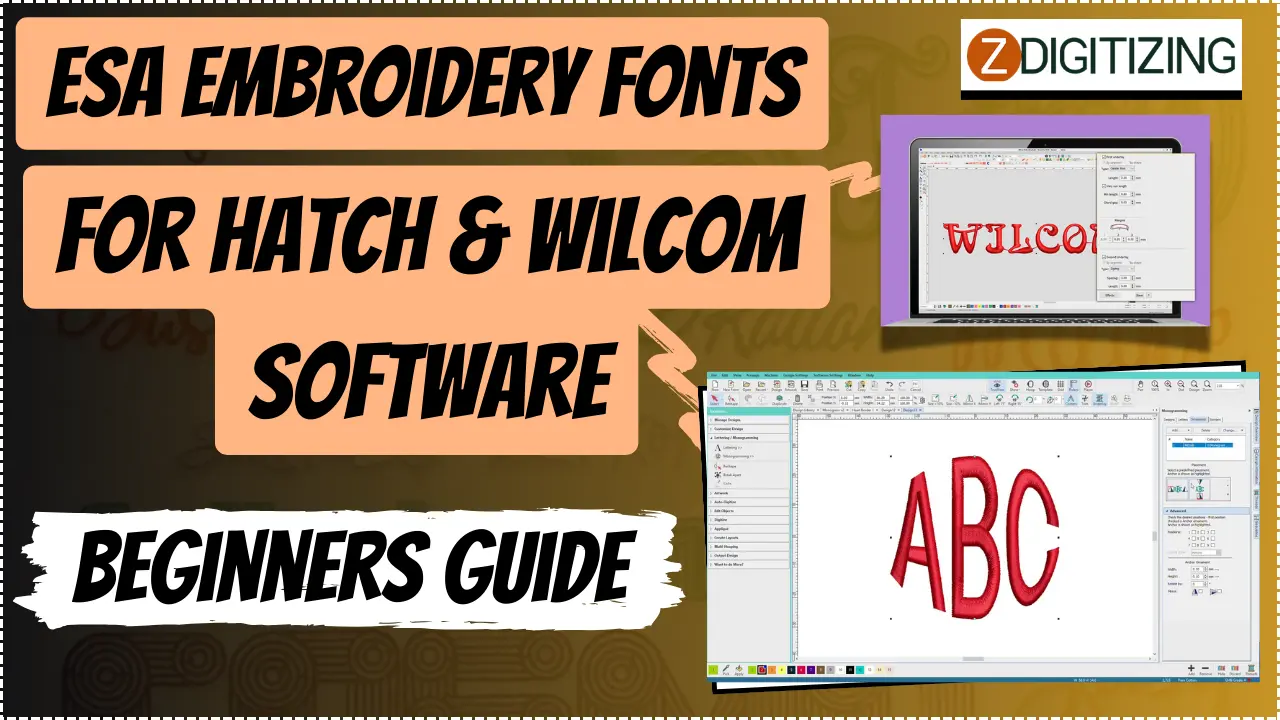
Embroidery is an ancient craft that has evolved significantly over the years. With the advent of technology, embroidery enthusiasts now have access to a wide range of tools and software to enhance their creativity. One such tool is ESA Embroidery Fonts, which are specifically designed for use with popular software like Hatch & Wilcom. In this beginner’s guide, we’ll explore everything you need to know about ESA Embroidery Fonts, from understanding embroidery digitizing to choosing the right fonts for your projects.
Introduction to ESA Embroidery Fonts
ESA Embroidery Fonts are specialized fonts that are compatible with Hatch & Wilcom Software, two of the leading embroidery software in the industry. These fonts are designed to be easy to use and offer a wide range of styles and designs to suit every project.
Embroidery digitizing is the process of converting artwork into a digital file that can be read by embroidery machines. This process is crucial for achieving accurate and high-quality embroidery designs.
Getting Started with Hatch & Wilcom Software
Hatch & Wilcom Software are powerful tools that offer a wide range of features for embroidery enthusiasts. From basic stitching to advanced design capabilities, these software programs are essential for creating stunning embroidery designs.
Importance of Choosing the Right Embroidery Fonts
Choosing the right embroidery fonts is essential for achieving the desired look and feel of your designs. Factors such as style, size, and readability should all be considered when selecting fonts for your projects.
Exploring ESA Embroidery Fonts
ESA Embroidery Fonts come in a variety of styles and designs, ranging from traditional to modern. These fonts are specifically optimized for use with Hatch & Wilcom Software, ensuring seamless integration and superior results.
Beginner’s Guide to Using ESA Embroidery Fonts
For beginners, incorporating ESA Embroidery Fonts into your designs may seem daunting at first. However, with the right guidance and practice, you can quickly learn how to use these fonts to enhance your embroidery projects.
Benefits of ESA Embroidery Fonts
ESA Embroidery Fonts offer numerous benefits for embroidery enthusiasts, including enhanced creativity, improved efficiency, and greater customization options.
Common Challenges Faced by Beginners
Like any new skill, using ESA Embroidery Fonts comes with its own set of challenges. Understanding and overcoming these challenges is essential for mastering the art of embroidery design.
Tips for Optimal Results
To achieve optimal results with ESA Embroidery Fonts, it’s essential to follow best practices and guidelines. These tips will help you get the most out of your embroidery projects.
Embroidery Digitizing and Its Role in Font Creation
Embroidery digitizing plays a crucial role in font creation, ensuring that fonts are accurately translated into embroidery designs. Understanding this process is essential for achieving high-quality results.
Choosing a Reliable Digitizing Company
When it comes to embroidery digitizing, choosing the right company like zdigitizing is paramount. Factors such as experience, quality, and reliability should all be considered when selecting a digitizing company.
Key Considerations for Embroidery Machine Owners
Embroidery machine owners can greatly benefit from using ESA Embroidery Fonts. By understanding the importance of font selection and digitizing, machine owners can maximize the potential of their embroidery projects.
Conclusion
In conclusion, ESA Embroidery Fonts are a valuable tool for embroidery enthusiasts looking to enhance their designs. By understanding the fundamentals of embroidery digitizing and choosing the right fonts for your projects, you can take your embroidery skills to the next level.
FAQs About ESA Embroidery Fonts and Digitizing
- What are ESA Embroidery Fonts?
- How do I incorporate ESA Embroidery Fonts into my designs?
- What is embroidery digitizing, and why is it important?
- How do I choose the right digitizing company for my projects?
- Can ESA Embroidery Fonts be used with any embroidery machine?