In the fast-paced world of modern manufacturing, staying ahead of the curve requires constant innovation and adaptation. As industries evolve, so do the tools and technologies used to create, refine, and assemble products. From precision machining to advanced robotics, the arsenal of cutting-edge tools available to manufacturers continues to expand, offering new opportunities for efficiency, precision, and customization.
Expand Toolroom offers state-of-the-art Manual Mills, empowering modern manufacturing with precision and versatility. From traditional machining to advanced techniques, our tools enable manufacturers to innovate, customize, and excel in today’s dynamic industrial landscape.
In this article, we delve into the latest innovations in manufacturing tools and their applications across various industries.
Precision Machining: The Backbone of Modern Manufacturing
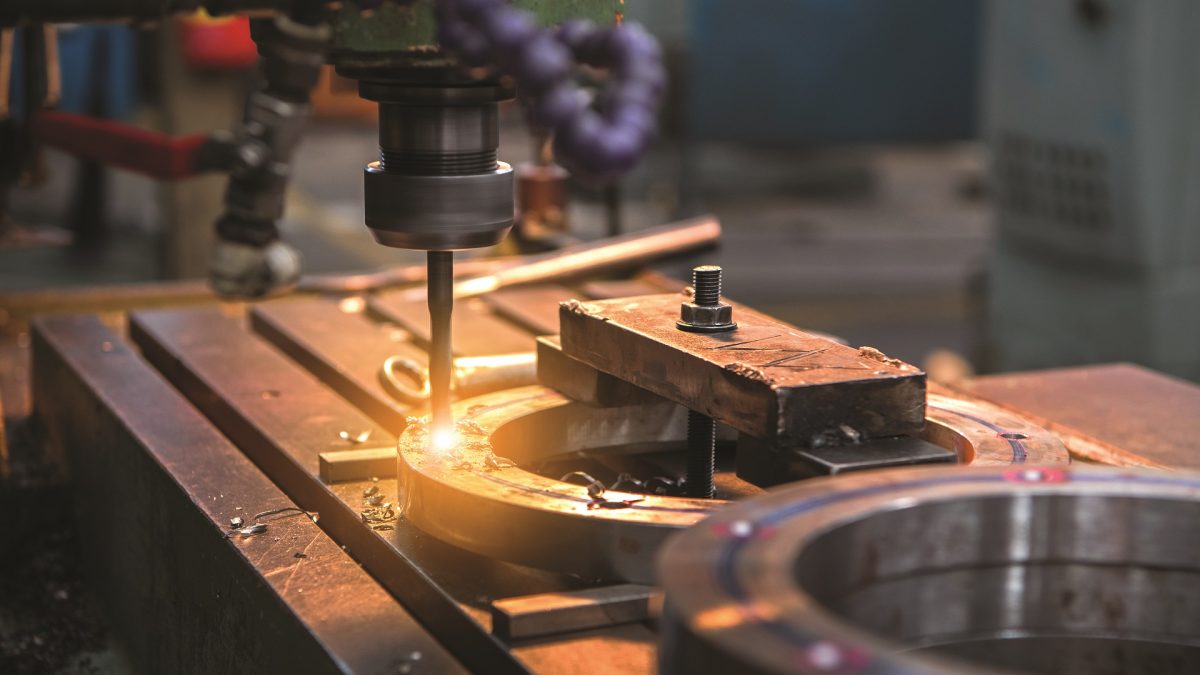
At the heart of many manufacturing processes lies precision machining, a technique that involves removing material from a workpiece to create intricate shapes and components with tight tolerances. Traditional machining methods such as milling, turning, and grinding have long been staples of manufacturing operations. However, recent advancements in machining technology have led to the development of high-speed machining, multi-axis milling, and computer numerical control (CNC) machining, enabling greater precision, speed, and flexibility in production processes.
One notable innovation in precision machining is the use of advanced cutting tools made from exotic materials such as carbide, ceramic, and diamond coatings. These cutting-edge tools offer superior wear resistance, heat dissipation, and tool life, allowing manufacturers to achieve higher levels of productivity and cost-effectiveness.
Additive Manufacturing: Redefining Production Paradigms
In addition to traditional subtractive manufacturing techniques, additive manufacturing, also known as 3D printing, has emerged as a game-changer in modern production processes. Unlike conventional manufacturing methods that involve removing material from a solid block, additive manufacturing builds objects layer by layer from digital design files, offering unparalleled design freedom and customization options.
The applications of additive manufacturing span a wide range of industries, from aerospace and automotive to healthcare and consumer goods. In aerospace, for example, additive manufacturing enables the production of lightweight, complex components with reduced material waste and lead times. In healthcare, 3D printing is revolutionizing patient care by enabling the fabrication of custom implants, prosthetics, and medical devices tailored to individual needs.
Discover precision and reliability with Expand Toolroom’s Manual Lathes. Designed for modern manufacturing, our lathes deliver exceptional performance and versatility, enabling craftsmen and professionals to create intricate components with accuracy and efficiency.
Robotics and Automation: Enhancing Efficiency and Safety
Robotics and automation have become integral components of modern manufacturing facilities, streamlining production processes, and enhancing efficiency, accuracy, and safety. Collaborative robots, or cobots, work alongside human operators to perform repetitive tasks, handle heavy payloads, and navigate dynamic environments with ease.
Furthermore, advancements in artificial intelligence (AI) and machine learning enable robots to adapt and learn from their surroundings, improving productivity and optimizing resource allocation in real-time. From assembly line robots to autonomous guided vehicles (AGVs), robotic systems offer manufacturers unprecedented flexibility and scalability to meet evolving production demands.
Digital Twins and Virtual Prototyping: Optimizing Performance and Design
Digital twins, virtual representations of physical assets and processes, are revolutionizing the way manufacturers design, simulate, and optimize their production systems. By creating a digital replica of a manufacturing environment, engineers can conduct virtual experiments, simulate various scenarios, and predict outcomes with a high degree of accuracy.
Moreover, digital twins enable manufacturers to monitor and analyze real-time data from sensors and IoT devices, allowing for proactive maintenance, predictive analytics, and continuous improvement initiatives. By leveraging digital twins, manufacturers can optimize equipment performance, minimize downtime, and reduce operational costs while ensuring product quality and reliability.
The Role of Advanced Materials
In conjunction with cutting-edge tools and technologies, the use of advanced materials is revolutionizing modern manufacturing processes. Materials such as composites, nanomaterials, and superalloys offer unique properties and performance characteristics that traditional materials cannot match. From lightweight aircraft components to high-strength automotive parts, advanced materials enable manufacturers to achieve new levels of efficiency, durability, and sustainability in their products.
Composite materials, for example, combine the strength and stiffness of fibers such as carbon or glass with a matrix material like resin to create lightweight yet strong structures. These materials are increasingly used in aerospace, automotive, and sporting goods industries for their superior strength-to-weight ratio and resistance to corrosion and fatigue.
Nanomaterials, on the other hand, exhibit unique properties at the nanoscale, offering enhanced mechanical, electrical, and thermal properties compared to conventional materials. Nanotechnology enables manufacturers to develop materials with tailored properties for specific applications, such as nanocomposites for lightweight and high-performance structural components or nanocoatings for improved wear resistance and surface properties.
Superalloys, characterized by their exceptional heat resistance, strength, and corrosion resistance, are commonly used in aerospace, energy, and automotive industries for critical components subjected to extreme operating conditions. These materials enable manufacturers to push the boundaries of performance and efficiency in high-temperature environments, such as gas turbine engines and power generation systems.
Customization and Personalization in Manufacturing
Another key trend in modern manufacturing is the increasing demand for customization and personalization in products. With advancements in digital design tools, additive manufacturing, and automation, manufacturers can offer consumers greater flexibility and choice in product design, configuration, and features.
Mass customization, a hybrid approach that combines the economies of scale of mass production with the flexibility of customization, enables manufacturers to produce customized products at scale efficiently. By leveraging digital design and manufacturing technologies, companies can tailor products to individual customer preferences while maintaining cost-effectiveness and production efficiency.
Furthermore, the rise of digital manufacturing platforms and on-demand manufacturing services enables consumers to participate in the design and customization process, empowering them to co-create products that meet their unique needs and preferences. From personalized consumer goods to customized medical devices, the era of mass customization is reshaping the manufacturing landscape and redefining the relationship between producers and consumers.
Conclusion: Embracing Innovation in Manufacturing
In conclusion, the evolution of manufacturing tools reflects the ongoing quest for innovation, efficiency, and excellence in production processes. From precision machining and additive manufacturing to robotics and digital twins, the latest advancements in manufacturing technology offer manufacturers unprecedented opportunities to enhance productivity, quality, and sustainability.
As industries continue to evolve and adapt to changing market dynamics, embracing cutting-edge tools and technologies will be essential for staying competitive in the global marketplace. By investing in innovation, fostering collaboration, and embracing a culture of continuous improvement, manufacturers can unlock new possibilities, drive growth, and shape the future of modern manufacturing.